Showing posts with label reading. Show all posts

Saturday, March 17, 2012

NZ Book Month, Ursula Le Guin, and Dragons.


"The unread story is not a story; it is little black marks on wood pulp. The reader, reading it, makes it live: a live thing, a story." - Ursula K. Le Guin


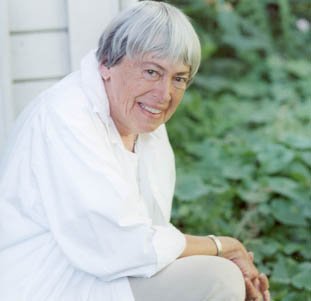
Here in New Zealand it is NZ Book Month, and I am dedicating my month (or at least, whatever free time I can scape off the bottom of the barrel of my diary) to Ursula K. Le Guin. For those of you who don't recognize the name, or do recognize it but can't quite seem to recall exactly where you know it from, she is a multi-award winning fantasy author of the famous book series Earthsea. The first of the series, A Wizard of Earthsea, has won prizes, been made into movies and television series, and has been read and loved by generations of fantasy enthusiasts.


Despite the fact that the book was first published in 1968, I only finally got my hand on a copy of the book late last year -- and finally got around to reading it earlier this year. Despite being very interested in reading the Earthsea books, after hearing so much about them, I never seemed able to find a copy -- new or secondhand. Finally, when a local Borders chapter closed down and put all its books on 50% off, I found A Wizard of Earthsea in a bargain bin -- along with a collection of short stories about Earthsea, titled Tales from Earthsea. After reading the first book, I was hooked. I couldn't believe it. The story was so mythical, so symbolic, so lyrical and...well...magical!

Why had no one ever tied me down, threatened me, bribed me, done something just to make me read this book? What kind of friends do I have?! Needless to say, I immediately went online and found the rest of the books. I purchased A Wizard of Earthsea, The Tombs of Atuan, The Farthest Shore and Tehanu all in one brilliant combined edition. It took me about a week (including one memorable Sunday spent on a coach in the sun, dug into Tehanu like a tick) to finish all the books, and then begin the collection of short stories.

 It's impossible to say which were my favorite, because each book was so uniquely different from the last. The energy and atmosphere, and the confrontations placed before the protagonists, were all so individual -- each individual book has its own spirit, its own mana.

While The Farthest Shore is a wonderful epic quest to save the world, The Tombs of Atuan is quieter, more psychological tale -- a story about saving just one soul, trapped in a dark and terrifying place in life.


Shortly after (in a fever of Earthsea madness) I rented the animated Studio Ghibli move Tales From Earthsea from the local video store. I had watched the movie a few years earlier when it was a new release, and enjoyed it, though it didn't leave as much of an impression as other Studio Ghibli films, such as My Neighbor Totoro and Howl's Moving Castle. But at that time, I hadn't read the books yet.

While I believe Ursula Le Guin was disappointed by the eventual product made by the studio, I found myself appreciating what it attempted to achieve. The plot is a melting pot of several Earthsea books, all mixed together in one movie.  The Farthest Shore stands out more than the other books as an important influence, but elements from A Wizard of Earthsea and Tehanu are strong also.


Despite this obvious let down, there are elements which save it.

For one, the movie provides beautiful, artistic, and even painterly, representations of the world of Earthsea. There is also an amazing soundtrack (with some impressive Scottish-sounding airs) to accompany the film, providing Earthsea with an atmosphere of magic that suits the fantasy world quite well. Despite the somewhat butchered storyline, Tales of Earthsea provides visual and auditory sensory experiences that both satisfy and inspire.


As life goes in circles and cycles, Ursula Le Guin has begun to penetrate not only my spare time, but also my studies. For my paper Cultures of the Supernatural, I am studying fantasy, horror and fairy-tales for their literary merit -- and with quite a sizable essay on the horizon, I have begun searching my University library high and low for essays, critiques and theories on the subject of the fantastic. In doing so, I stumbled upon the collection of essays The Language of the Night by Ursula Le Guin (edited by Susan Wood).

The essays are wonderful, lyrical, and just as awe-inspiring as her works of fiction. She considers and argues on subjects concerning fantasy fiction, science fiction, writing, creativity, and publishing. Here is one quote to give you a taste:

"For fantasy is true of course. It isn't factual, but it is true. Children know that. Adults know it too, and that is precisely why many of them are afraid of fantasy. They know that its truth challenges, even threatens, all that is false, all that is phony, unnecessary, and trivial in the life they have let themselves be forced into living. They are afraid of dragons, because they are afraid of freedom." - from her essay, Why Are Americans Afraid of Dragons?


Why, indeed?
So, do you need any more cajoling and bossing? More peer pressure and pushing? Go, go forth! Go to your library, your favorite bookstore -- anywhere! -- and find something, anything, by Ursula Le Guin and read it! Go to her website and check out her excerpts, and some essays. Shoo! SHOO! *waves arms frantically*

Sunday, November 28, 2010

Top 100 Books - How many have you read?

"The BBC believes most people will have read only 6 of the 100 books listed here."

I have just found this list over on the "This Miss Loves to Read" blog  and I wanted to take a look to see how well read I am. Turns out 18 books isn't too bad, but not that great either. Gives me a good idea though for what titles to look out for though next time I am at a 2nd hand book store! 

Instructions:


•Copy this list.
•Bold those books you’ve read in their entirety.
•Italicise the ones you started but didn’t finish or read only an excerpt.
•Tag other book nerds.
•Highlight the ones that you have but haven't read.
Now, let's see:

Pride and Prejudice – Jane Austen
The Lord of the Rings – JRR Tolkien
Jane Eyre – Charlotte Bronte
Harry Potter series – JK Rowling
To Kill a Mockingbird – Harper Lee
The King James Bible 
Wuthering Heights – Emily Bronte
Nineteen Eighty Four (1984) – George Orwell
His Dark Materials – Philip Pullman
Great Expectations – Charles Dickens
Little Women – Louisa M Alcott
Tess of the D’Urbervilles – Thomas Hardy
Catch 22 – Joseph Heller
Complete Works of Shakespeare
Rebecca – Daphne Du Maurier
The Hobbit – JRR Tolkien 
Birdsong – Sebastian Faulk
Catcher in the Rye – JD Salinger
The Time Traveler’s Wife – Audrey Niffenegger
Middlemarch – George Eliot
Gone With The Wind – Margaret Mitchell  (own, haven't read)
The Great Gatsby – F. Scott Fitzgerald
War and Peace – Leo Tolstoy
The Hitchhiker’s Guide to the Galaxy – Douglas Adams
Brideshead Revisited – Evelyn Waugh
Crime and Punishment – Fyodor Dostoyevsky
Grapes of Wrath – John Steinbeck
Alice in Wonderland – Lewis Carroll
The Wind in the Willows – Kenneth Grahame  (own, haven't read)
Anna Karenina – Leo Tolstoy
David Copperfield – Charles Dickens
Chronicles of Narnia – CS Lewis
Emma -Jane Austen
Persuasion – Jane Austen
The Lion, The Witch and the Wardrobe – CS Lewis
The Kite Runner – Khaled Hosseini  (own, haven't read)
Captain Corelli’s Mandolin – Louis De Bernieres
Memoirs of a Geisha – Arthur Golden
Winnie the Pooh – A.A. Milne
Animal Farm – George Orwell  (own, haven't read)
The DaVinci Code – Dan Brown
One Hundred Years of Solitude – Gabriel Garcia Marquez
A Prayer for Owen Meaney – John Irving
The Woman in White – Wilkie Collins
Anne of Green Gables – LM Montgomery
Far From The Madding Crowd – Thomas Hardy
The Handmaid’s Tale – Margaret Atwood
Lord of the Flies – William Golding
Atonement – Ian McEwan
Life of Pi – Yann Martel
Dune – Frank Herbert
Cold Comfort Farm – Stella Gibbons
Sense and Sensibility – Jane Austen
A Suitable Boy – Vikram Seth
The Shadow of the Wind – Carlos Ruiz Zafon
A Tale Of Two Cities – Charles Dickens
Brave New World – Aldous Huxley
The Curious Incident of the Dog in the Night-time – Mark Haddon
Love In The Time Of Cholera – Gabriel Garcia Marquez
Of Mice and Men – John Steinbeck
Lolita – Vladimir Nabokov
The Secret History – Donna Tartt
The Lovely Bones – Alice Sebold
Count of Monte Cristo – Alexandre Dumas
On The Road – Jack Kerouac
Jude the Obscure – Thomas Hardy
Bridget Jones’s Diary – Helen Fielding
Midnight’s Children – Salman Rushdie
Moby Dick – Herman Melville
Oliver Twist – Charles Dickens
Dracula – Bram Stoker
The Secret Garden – Frances Hodgson Burnett
Notes From A Small Island – Bill Bryson
Ulysses – James Joyce
The Inferno – Dante
Swallows and Amazons – Arthur Ransome
Germinal – Emile Zola
Vanity Fair – William Makepeace Thackeray
Possession – AS Byatt
Christmas Carol – Charles Dickens
Cloud Atlas – David Mitchell
The Color Purple – Alice Walker
The Remains of the Day – Kazuo Ishiguro
Madame Bovary – Gustave Flaubert
A Fine Balance – Rohinton Mistry
Charlotte’s Web – E.B. White
The Five People You Meet In Heaven – Mitch Albom
Adventures of Sherlock Holmes – Sir Arthur Conan Doyle
The Faraway Tree Collection – Enid Blyton
Heart of Darkness – Joseph Conrad
The Little Prince – Antoine De Saint-Exupery
The Wasp Factory – Iain Banks
Watership Down – Richard Adams
A Confederacy of Dunces – John Kennedy Toole
A Town Like Alice – Nevil Shute
The Three Musketeers – Alexandre Dumas
Hamlet – William Shakespeare
Charlie and the Chocolate Factory – Roald Dahl
Les Miserables – Victor Hugo

LinkWithin

Related Posts Plugin for WordPress, Blogger...