Showing posts with label fairy tales. Show all posts

Saturday, March 17, 2012

NZ Book Month, Ursula Le Guin, and Dragons.


"The unread story is not a story; it is little black marks on wood pulp. The reader, reading it, makes it live: a live thing, a story." - Ursula K. Le Guin


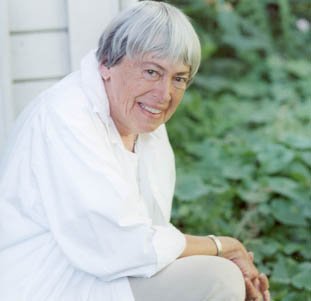
Here in New Zealand it is NZ Book Month, and I am dedicating my month (or at least, whatever free time I can scape off the bottom of the barrel of my diary) to Ursula K. Le Guin. For those of you who don't recognize the name, or do recognize it but can't quite seem to recall exactly where you know it from, she is a multi-award winning fantasy author of the famous book series Earthsea. The first of the series, A Wizard of Earthsea, has won prizes, been made into movies and television series, and has been read and loved by generations of fantasy enthusiasts.


Despite the fact that the book was first published in 1968, I only finally got my hand on a copy of the book late last year -- and finally got around to reading it earlier this year. Despite being very interested in reading the Earthsea books, after hearing so much about them, I never seemed able to find a copy -- new or secondhand. Finally, when a local Borders chapter closed down and put all its books on 50% off, I found A Wizard of Earthsea in a bargain bin -- along with a collection of short stories about Earthsea, titled Tales from Earthsea. After reading the first book, I was hooked. I couldn't believe it. The story was so mythical, so symbolic, so lyrical and...well...magical!

Why had no one ever tied me down, threatened me, bribed me, done something just to make me read this book? What kind of friends do I have?! Needless to say, I immediately went online and found the rest of the books. I purchased A Wizard of Earthsea, The Tombs of Atuan, The Farthest Shore and Tehanu all in one brilliant combined edition. It took me about a week (including one memorable Sunday spent on a coach in the sun, dug into Tehanu like a tick) to finish all the books, and then begin the collection of short stories.

 It's impossible to say which were my favorite, because each book was so uniquely different from the last. The energy and atmosphere, and the confrontations placed before the protagonists, were all so individual -- each individual book has its own spirit, its own mana.

While The Farthest Shore is a wonderful epic quest to save the world, The Tombs of Atuan is quieter, more psychological tale -- a story about saving just one soul, trapped in a dark and terrifying place in life.


Shortly after (in a fever of Earthsea madness) I rented the animated Studio Ghibli move Tales From Earthsea from the local video store. I had watched the movie a few years earlier when it was a new release, and enjoyed it, though it didn't leave as much of an impression as other Studio Ghibli films, such as My Neighbor Totoro and Howl's Moving Castle. But at that time, I hadn't read the books yet.

While I believe Ursula Le Guin was disappointed by the eventual product made by the studio, I found myself appreciating what it attempted to achieve. The plot is a melting pot of several Earthsea books, all mixed together in one movie.  The Farthest Shore stands out more than the other books as an important influence, but elements from A Wizard of Earthsea and Tehanu are strong also.


Despite this obvious let down, there are elements which save it.

For one, the movie provides beautiful, artistic, and even painterly, representations of the world of Earthsea. There is also an amazing soundtrack (with some impressive Scottish-sounding airs) to accompany the film, providing Earthsea with an atmosphere of magic that suits the fantasy world quite well. Despite the somewhat butchered storyline, Tales of Earthsea provides visual and auditory sensory experiences that both satisfy and inspire.


As life goes in circles and cycles, Ursula Le Guin has begun to penetrate not only my spare time, but also my studies. For my paper Cultures of the Supernatural, I am studying fantasy, horror and fairy-tales for their literary merit -- and with quite a sizable essay on the horizon, I have begun searching my University library high and low for essays, critiques and theories on the subject of the fantastic. In doing so, I stumbled upon the collection of essays The Language of the Night by Ursula Le Guin (edited by Susan Wood).

The essays are wonderful, lyrical, and just as awe-inspiring as her works of fiction. She considers and argues on subjects concerning fantasy fiction, science fiction, writing, creativity, and publishing. Here is one quote to give you a taste:

"For fantasy is true of course. It isn't factual, but it is true. Children know that. Adults know it too, and that is precisely why many of them are afraid of fantasy. They know that its truth challenges, even threatens, all that is false, all that is phony, unnecessary, and trivial in the life they have let themselves be forced into living. They are afraid of dragons, because they are afraid of freedom." - from her essay, Why Are Americans Afraid of Dragons?


Why, indeed?
So, do you need any more cajoling and bossing? More peer pressure and pushing? Go, go forth! Go to your library, your favorite bookstore -- anywhere! -- and find something, anything, by Ursula Le Guin and read it! Go to her website and check out her excerpts, and some essays. Shoo! SHOO! *waves arms frantically*

Thursday, February 16, 2012

Studio Ghibli: The Secret World of Arrietty and The Borrowers


I'm waiting in unbelievable anticipation of Studio Ghibli's latest feature film, "The Secret World of Arrietty." The film is based upon a book (which I will be studying as part of my children's literature classes at university this year) called The Borrowers by Mary Norton-- a well-known fantasy book originally released in 1952, about little people who live in the walls and beneath the floorboards of regular human houses. (Click here for an LA Times review on Arrietty.)


This book only just recently found it's way onto my bookshelf -- mostly because of the fact that I will have to be studying it later in the year. I remember many years ago watching the 1997 film starring starring John Goodman, but it never made much of an impression. When Charles De Lint released his own rendition of the original tale, titled Little (Grrl) Lost, I took a bit more interest. It was a bit more modern and edgy compared to the older stories, and I loved the mythology about how borrowers/little people were all originally birds who forget how to fly.


Studio Ghibli is well known for its animated fairy tale and fantasy films, such as Spirited Away, Howl's Moving Castle and Ponyo. With Studio Ghibli, and in particular the films directed by Hayao Miyazaki, I found everything that I missed in Disney fairy tale movies: drama, beauty, and heart. While Disney tried to make a commercial product, Ghibli made art. Looking back, it was probably Studio Ghibli that provided some of my earliest influences in fantasy -- namely, the 1985 film Nausicaä of the Valley of the Wind. It was released in the same year I was born, but I didn't see the film until perhaps 10 years later. It set the gold standard, in my mind, for animated films, fantasy stories and storytelling. Fantastically, ever since Studio Ghibli has never failed to inspire.


Tuesday, February 14, 2012

Valentine's Day: Selkie Folklore and Relationships

“How wrong it is for a woman to expect the man to build the world she wants, 
rather than to create it herself.” Anais Nin


This week a friend of mine is getting married. She has been a good friend of mine for several years now, and when we first met I was at a very difficult juncture of my life. My first career choice didn't appear to be working out, and I was feeling listless, restless, confused and unhappy. Eventually I ended up going back to university, and learning painting, creative writing, sociology and gender studies. During this time of transformation and adaptation, my friend was a pillar of insight and inspiration -- a dedicated artist, actress and scholar in her own right. She taught me that even when no one wants to pay you to do the thing that you want to do, you still have to go on, keep at it and do it -- because otherwise, you won't be being yourself. And I clung onto that.

Now that she is getting married she has taken off her academic hat, and even her artist hat, for an indefinite period of time, which has brought up some mixed feelings within myself. Life changes and takes you on strange detours and routes, and you just have to go with that. But still I am reminded of the Scottish folktale of the selkie -- a seal that can transform into a human being. In the stories, often the selkie is a female who sheds her sealskin and finds a human man to marry.


Sometimes she is captured from the beach and her sealskin is taken by the man. Other times she is quite independent and familiar with the human world -- and even has a job, or is a member of the community. In other stories, the selkie can also be a man looking for a human wife, or he is seeking revenge for a member of his seal family that was murdered by a fisherman.

But by far the most well-known type of selkie story is that of the lady selkie who falls in love with the human man, and so that they can always be together, her husband takes and hides her sealskin from her. One day in the future, her children discover the sealskin -- sometimes it's buried, at other times it is hidden in the attic or in a wardrobe -- and they unwittingly tell their mother. Unable to resist the pull of the sea, her original home, she takes the sealskin, and is never seen again.


There is an important message in here about relationships, love, and marriage. Many people get into relationships, and give up so much of themselves. Sometimes it is taken, but more often it is given freely, without realizing the implications. As a culture we believe that love is about giving -- giving up, and often giving in. We give to our partners, we give them our time, our attention, our bodies, our home, our family. We even give up the things that are most important to us -- the cello in the corner, the notebooks filled with songs and stories, the running shoes stained with spring mud. And then one day, we don't recognize ourselves anymore. Or worse, we don't like who we have become. We have lost our sense of self, and have no idea where to look.

What happens when we do rediscover that sense of self? Will we dive off the rocks into the grey ocean, like the selkie donning her mantle of sealskin? Will we leave our responsibilities, our mate and our home, for truth and purpose and wholeness? It's a painful and pain-causing way to find your freedom.

Neal Donald Walsch, spiritual teacher and author of "Conversations with God," suggests that romance, marriage and love be not about giving things to each other. Instead, relationships could possibly be about sharing. Give up the idea that you have to give to your partner for them to stay, for them to be happy, for them to love you. Imagine that you could both be happy, full and complete -- and simply see your relationship as an opportunity to share that happiness and completeness with each other.


It's a novel idea, but perhaps a more sustainable one? Perhaps an idea that doesn't require us to sacrifice our lives like a lamb on an alter to the one we love.

Today is Valentine's Day, and I fully intend to spend it demonstrating to the person I care about just how important, how special, and how unique they are in my eyes. It's a wonderful chance to give each other special memories, and remind ourselves of how much we are affected by the people we share our lives, our conversations and our beds with.

At the same time, maybe I will also take a few moments when I can to brush off my fiction notebooks (my sealskin, as it were) and revel in how much I love myself, too.

Friday, February 10, 2012

Fairy Tale News

"Fairy stories are everywhere and every-day. We are all princes and princesses in disguise, or ogres or wicked dwarfs. All these histories are the histories of human nature, which does not seem to change very much in a thousand years or so, and we don't get tired of the fairies because they are so true to it." -  Anne Thackeray Ritchie

Some really awesome fairy tale stuff is happening this week.

Goblin Fruit has just released their Winter 2012 issue of mythic poetry.

Author Helen Lowe has written a blog about traditional Maori mythology that features in New Zealand literature.

The first episode of "Once Upon A Time" aired last night on TV Two here in New Zealand. I was a bit disappointed at some of the cheesier elements of the episode -- but overall I am glad to see a fairy tale television show airing. Together with some fairy tale films such as Jack the Giant Killer, Snow White and the Hunstman, The Hobbit, and Troll Hunter, this is going to be a very fairy-tale-licious year.

Thursday, February 9, 2012

Fairy Tales, Mother Holle and the Creative Journey

Fairy tales and folklore has always featured a huge role in what keeps me going as an artist and a writer. Creative Every Day has recently posted a guest blog, written by yours truly, on the role fairy tales and inspiration play in the creative journey -- and how one particular fairy tale has recently helped to keep me afloat. Please check out my article on Mother Holle and the Creative Journey.


Saturday, May 14, 2011

Tricksters and Folklore

Just a shout out that today eHow has published my first two articles on folklore - "Types of Tricksters in Folktales" and "A List of Fables and Fairy Tales". Following the recent bout of natural disasters in New Zealand I was taking a wee hiatus from writing for pay, however with bills looming on the horizon I know I must get back to it. And to tell the truth, I am enjoying it. Being active, being creative, being productive - it helps. And to have an article of mine on the subject of myth published is very exciting.

LinkWithin

Related Posts Plugin for WordPress, Blogger...